Topics
Recent Updates
June 29, 2010
New York City Department of Buildings Stalled Sites Program
June 03, 2010
THE IMPORTANCE OF AN ON-SITE, FULL- TIME OWNER'S REPRESENTATIVE
April 15, 2010
Project Labor Agreements
New York City Department of Buildings Stalled Sites Program
Posted by: euser
June 29, 2010
Topic: Project Management
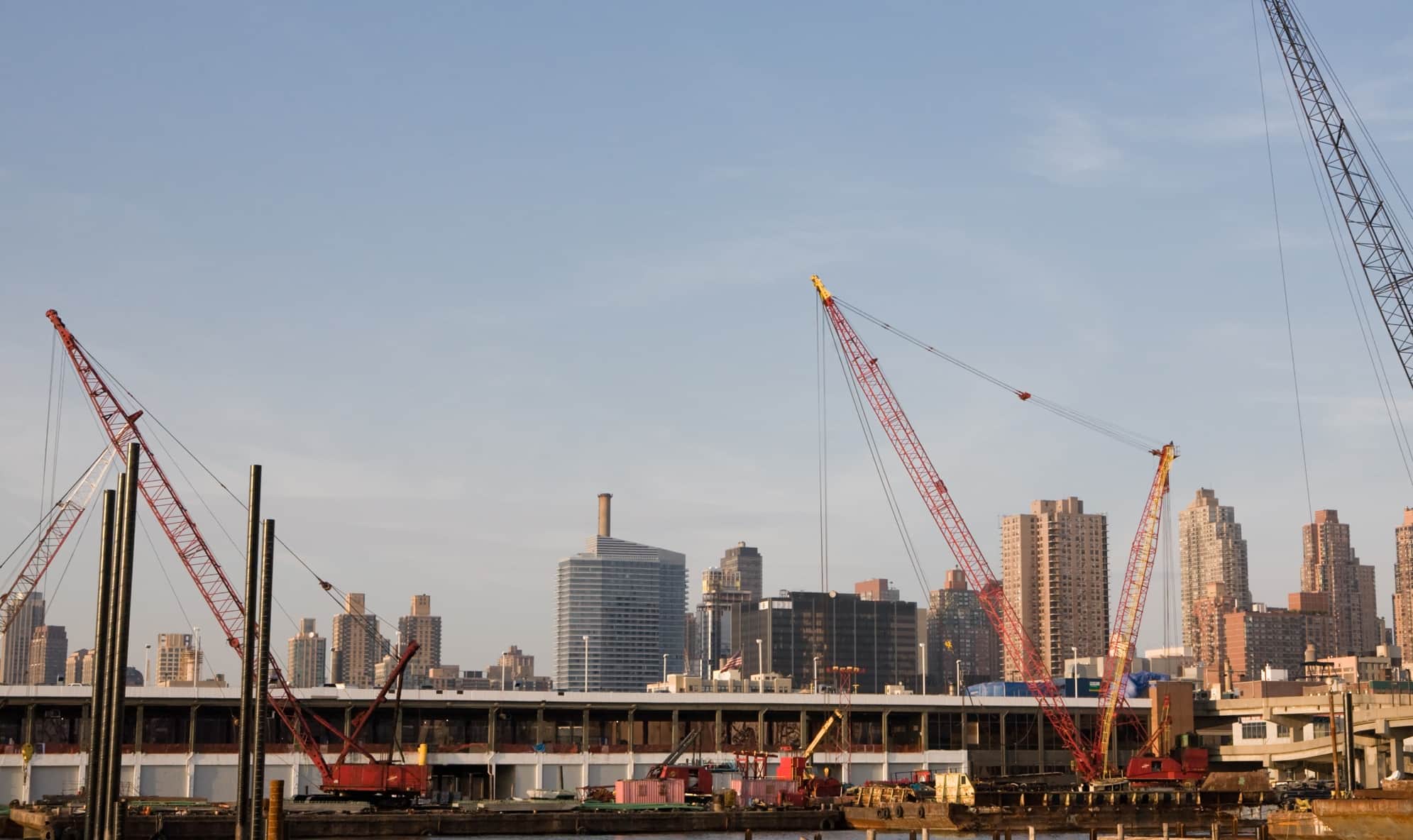
The City of New York has recently enacted legislation allowing Owner-Developers of stalled construction sites to quickly restart construction by voluntarily participating in a new site safety program in exchange for the right to renew building permits for up to four years. The details of the Local Law 70 of 2009 can be found here.
Owner-Developers can apply to the New York City Department of Buildings (DOB) to take part in the program where a work permit has expired or would otherwise expire due to suspension of work or failure to commence work. The main requirement for qualification in the program is the submission to and approval by the DOB of a Safety Monitoring Plan (SMP), which sets forth how the stalled site shall be maintained during the suspension or delay in commencement of the work at the site. Details on how to apply can be found here.
The importance of renewing a stalled project's permit can be great. Stalled projects that have filed permits under the 1968 Building Code that expire are otherwise required to re-file under the 2008 Building Code which has undergone significant changes from its predecessor and could result in major changes to previously approved plans and specifications, thereby causing delays in the (re)commencement of construction and increased costs.
For a more detailed explanation of DOB requirements for Owner-Developers to secure stalled sites, please contact our offices and ask to speak with one of our attorneys.
THE IMPORTANCE OF AN ON-SITE, FULL- TIME OWNER'S REPRESENTATIVE
Posted by: euser
June 03, 2010
Topic: Project Management
In the usual case, problems that arise during construction are not the subject of dispute resolution until a project is substantially completed. Owners may then find that negotiated construction contract provisions with regard to required written notice of claims, contemporaneous back-up documentation, and the process for extra work and delay claims have not been followed. An owner subsequently has to deal with construction contractors' claims of waiver of contract provisions, constructive notice of the claims, and "he said/she said" arguments in resolving disputes. In addition, the claimant contractors are on the job daily, can testify on "personal knowledge", have contemporaneous documentation, and are usually "litigation savvy".
In this situation, the owner may find itself at a considerable disadvantage in a construction litigation/arbitration proceeding without the availability of a full-time, on-site owner's representative (an experienced construction person). The architect, who makes periodic site visits to ensure general compliance with the design documents , is generally of little help in these circumstances. In short, an owner should provide a knowledgeable, full-time representative on its construction project (a) to ensure that the contract provisions inserted for the owner's benefit are enforced, especially those written notice and document requirements for claims; (b) to investigate claims as they happen; (c) to obtain personal knowledge as to the facts and circumstances of any problems or disputes that arise on the project; and (d) to provide daily written reports from an owner's perspective.
The old adage that "an ounce of prevention is worth a pound of cure" is apropos here considering the costs of resolving construction claims after the fact, and the costs associated with construction litigation/arbitration . A full-time, on-site owner's representative is well worth the investment on a construction project.
Source: Greenberg, Trager & Herbst, LLP
Project Labor Agreements
Posted by: euser
April 15, 2010
Topic: Project Management
As a response to the rapidly rising costs of construction and its impact on the New York City building industry, the Building Trades Employers' Association ("BTEA"), which represents 28 contractor groups and more than 1,700 union firms, and the Building and Construction Trade Council of Greater New York ("BCTC"), which represents approximately 100,000 union workers, have come to terms on a Project Labor Agreement ("PLA"), its intent being to stimulate construction at new or previously stalled sites.
According to published reports, the PLA is estimated to reduce project costs by an average of 16%-21%. PLA savings arise out of, among other things, an agreement by the parties not to permit strikes, lockouts or other work stoppages; a reduction in profit margins and freezing of management personnel wages; and setting a standard 8-hour workday and 40-hour workweek, which includes flexible starting times and lunch breaks. Notwithstanding, Owner-Developers have also voiced complaints with the PLA, debating the actual cost savings the PLA purportedly produces and whether these savings do enough to reduce construction cost.
Owner-Developers contemplating union labor construction are wise to consider the PLA as a viable cost-saving project option. The current PLA is in a template form, and negotiations with the BCTC and BTEA are undertaken on an individual project basis. If an Owner-Developer elects to use the PLA and reaches agreement with the BCTC and BTEA, it will influence a project's construction contracts.